

Consistent composition from filling to the final pour
Particle size and bulk density need to be compatible enough to limit separation within the packaged product.
Private-Label Mixed Cat Litter
Mixed cat litter combines plant-fiber pellets with sodium bentonite granules in a specified ratio. The blend can be developed around pack weight, tray texture, clump structure and target cost.
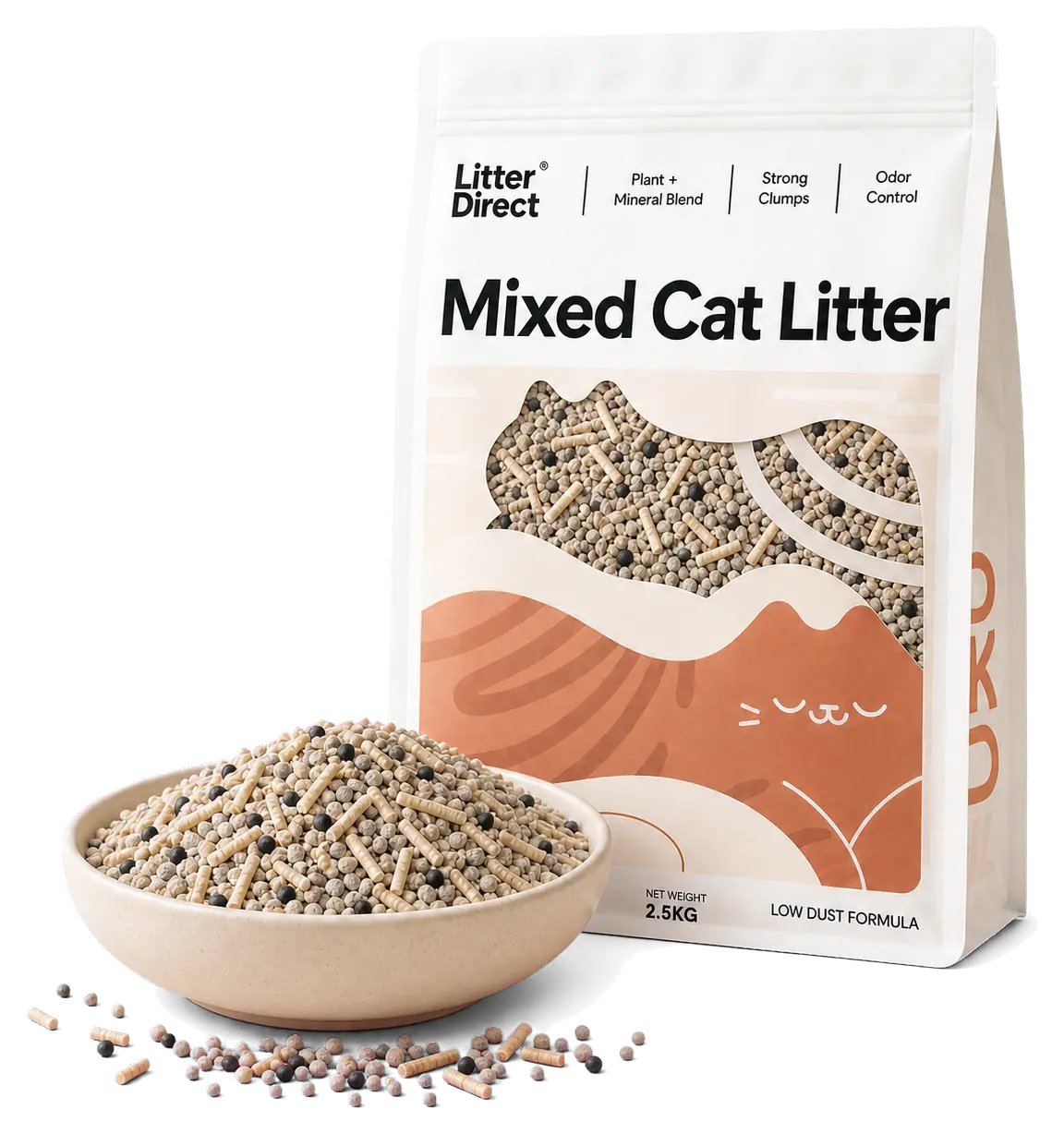
Product overview
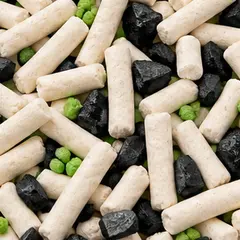
Mixed cat litter brings together components that differ in shape and bulk density. Plant-fiber pellets can lower pack weight, while sodium bentonite granules provide a familiar mineral texture and contribute to clump formation. Blend ratio, binder system, particle compatibility and mixing method all affect the finished product.
The specification should state whether the ratio is measured by weight or volume. Sample review should also examine separation after filling and transport, because performance claims need to reflect the complete packaged blend rather than isolated ingredients.
Particle size and bulk density need to be compatible enough to limit separation within the packaged product.
Mixed litter can introduce plant-fiber content while retaining mineral granules in the formula.
Product Knowledge
Mixed cat litter combines plant-fiber pellets with mineral granules in a defined ratio. Consistent composition throughout the bag matters because the proportions delivered to the tray affect texture and clumping.
Mixed litter can combine plant-fiber pellets, mineral granules, binders and odor-control materials in different proportions. A plant-forward blend can lower pack weight, while a mineral-forward formula provides a denser texture and can reinforce clump structure.
The product specification should identify the main materials, target ratio and acceptable tolerance. Because the components can differ greatly in bulk density, the specification also needs to state whether the ratio is measured by weight or by volume.
Materials with very different sizes, shapes or densities can separate during filling, transport and pouring. When this happens, the formula at the top of the bag may perform differently from the portion at the bottom.
Compatible particle profiles and controlled blending help keep the composition more even throughout the pack. Uniformity after normal transport is especially important for repeatable texture, clumping and odor-control performance.
Every mixed formula balances several priorities. Changing the proportion of plant fiber or mineral granules can affect clump strength, pack weight, tracking, dust and cost at the same time.
The preferred blend should meet the agreed priorities of the finished product as a whole. Comparing complete formulas under consistent conditions gives a more useful result than combining claims drawn from separate prototypes.
The approved specification records the component ratio and its measurement basis.
Compatible particle size and bulk density help limit separation during filling and transport.
Sample evaluation covers clump formation, scoop release and clean-litter loss.
Screening each component and managing pack handling can reduce loose fines.
Changing the blend ratio affects product weight, cost and handling at the same time.
Bag size, headspace and carton protection all influence blend uniformity during distribution.
 Green Tea
 Lavender
 Sea Breeze
 Custom Fragrance
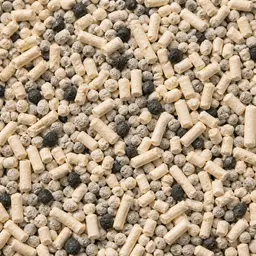 Plant–Mineral Base
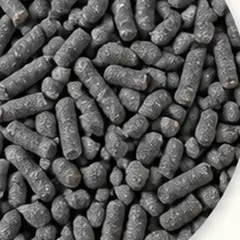 Activated-Carbon Option
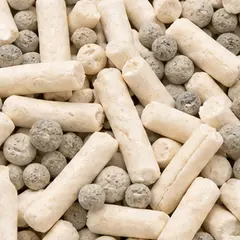 Mineral-Forward Blend
 Odor-Control Formula
We confirm the final pack size, material and artwork during product and packaging approval.
We develop distinct formulas and packaging for established and emerging pet brands.
We plan retail-ready pack formats and repeat-order specifications for chain stores.
We align pack size, price positioning and shelf presentation for grocery retail.
We account for shipping weight, bag protection and carton configuration for online sales.
We coordinate product, artwork and packaging requirements through a defined approval process.