
Defined composition, granule integrity and clean scoop release
A defined composition and measurable finished-product criteria provide a stronger basis for approval than the material name alone.
Private-Label Tapioca Cat Litter
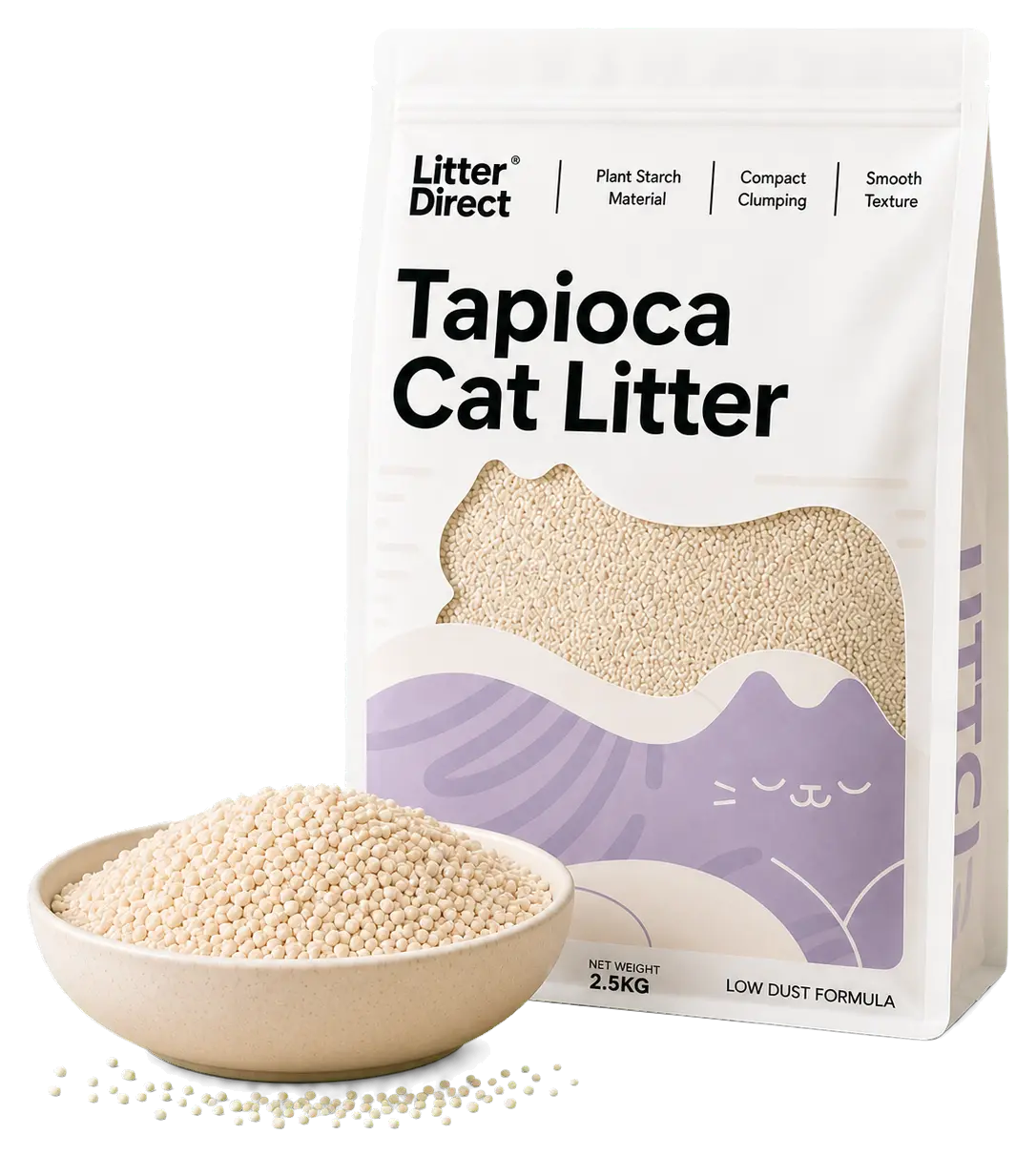
Tapioca cat litter uses cassava-derived starch as part of a plant-based clumping formula. Granule profile, binder balance and moisture criteria can be defined against an approved sample, with packaging selected for the finished formula.
Product overview
Cassava-derived starch can contribute to the binding system in a clumping plant litter, but the finished granules may also contain other plant ingredients and binders. Composition, particle structure and moisture level work together to determine dry handling and clump behavior.
Fine granules provide broad contact with liquid, while particle distribution also affects tracking and loose fines. Sample review should therefore compare the complete packaged formula, including its performance after storage under agreed conditions.
A defined composition and measurable finished-product criteria provide a stronger basis for approval than the material name alone.
Tapioca litter suits brands seeking a starch-based alternative with a defined granule profile and clumping specification.
Product Knowledge
Tapioca cat litter uses cassava-derived starch as part of a plant-based clumping system. The finished formula—not the ingredient name alone—determines granule integrity, scoopability and storage stability.
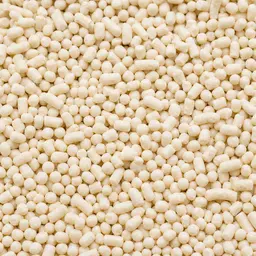
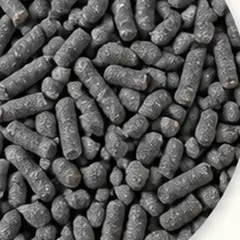
Tapioca starch can help wetted granules bind, while supporting plant ingredients and binders may contribute to granule strength. Other functional additions may support odor management. The exact composition varies by formula, so cassava-derived content does not define the product on its own.
A useful specification records the cassava-derived content, supporting ingredients, granule profile, moisture criteria and applicable quality checks. These details provide a clearer basis for product approval than a broad tapioca label.
Fine tapioca granules create an even, sand-like bed with a broad surface area for liquid contact. This format can support quick wetting and compact clumps, although smaller particles may also travel farther outside the box.
Mini-pellets and blended formulas offer a different texture and tracking profile. Across all formats, particle distribution, loose fines and breakage influence the finished texture, carry-out and handling experience.
A well-formed clump binds throughout without becoming pasty or sticking heavily to the tray. Granule construction, binder response and standing time all influence whether the clump remains intact when lifted.
Clump footprint, lift strength, tray residue and clean-litter loss provide a practical view of scoopability. Testing after packaged storage can also reveal whether humidity exposure has changed the product's handling.
The specification records cassava-derived content and any supporting plant ingredients or binders.
Particle distribution and bulk density influence texture, flow and contact with liquid.
Approved samples are compared for formation time, lift strength, tray residue and clean-litter loss.
Fine particles create a smooth bed but can also affect carry-out and loose-fines levels.
Starch-based granules can change with humidity, so the pack barrier and storage conditions matter.
The testing scope should reflect the approved formula and destination-market requirements.
 Green Tea
 Sea Breeze
 Lavender
 Custom Fragrance
 Cassava-Starch Base
 Activated-Carbon Option
We confirm the final pack size, material and artwork during product and packaging approval.
We develop distinct formulas and packaging for established and emerging pet brands.
We plan retail-ready pack formats and repeat-order specifications for chain stores.
We align pack size, price positioning and shelf presentation for grocery retail.
We account for shipping weight, bag protection and carton configuration for online sales.
We coordinate product, artwork and packaging requirements through a defined approval process.