
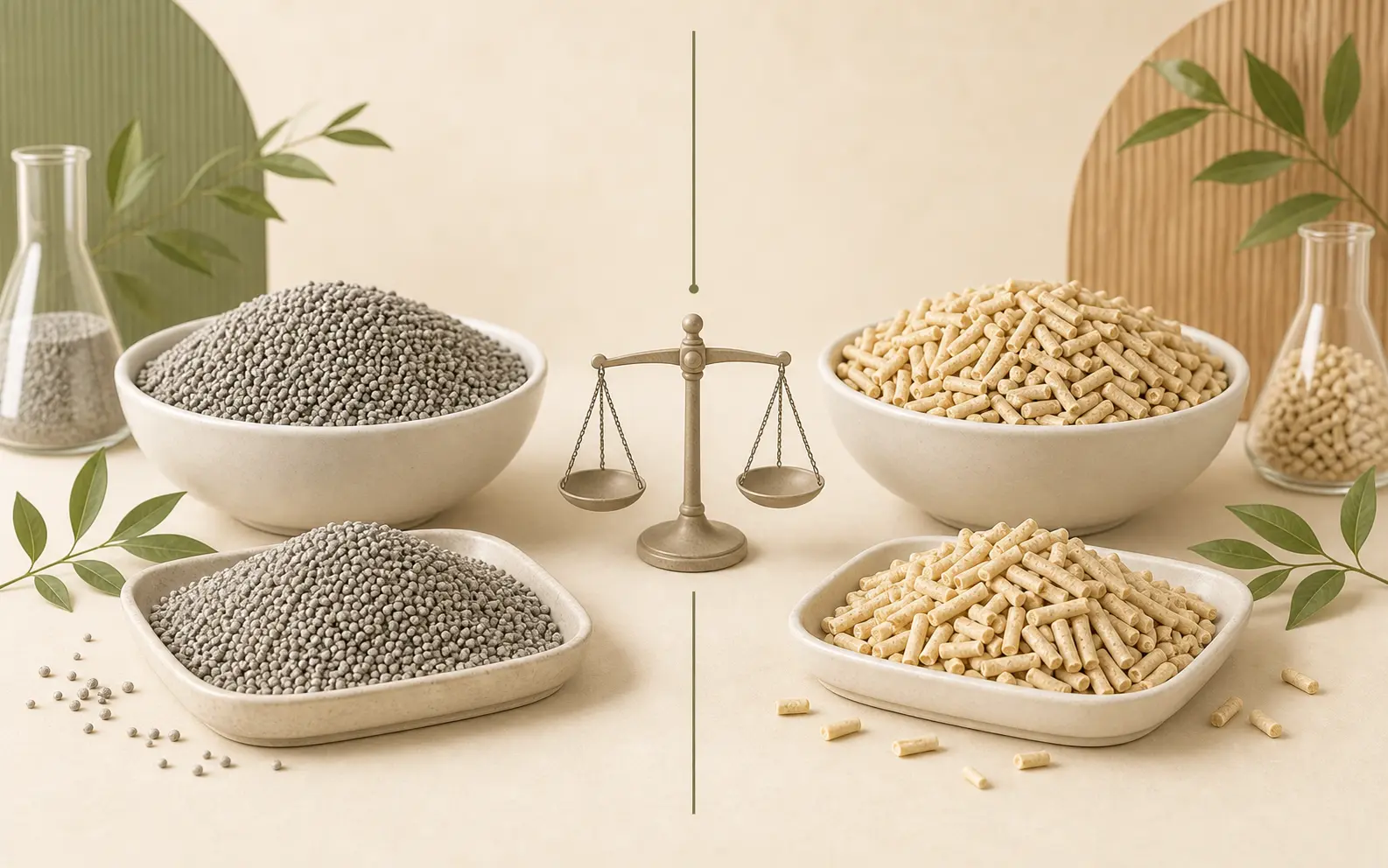
How the two product types differ
Bentonite litter is mineral-based and is commonly sold as a fine or granular clumping litter. Tofu litter is plant-based and is usually formed into pellets. These material and format differences affect pack weight, texture, tracking behavior and how customers handle the product.
Bentonite is generally denser, while tofu litter is usually lighter for the same volume. Actual performance in clumping, dust control and odor management varies by formulation and production quality in both categories.
Review logistics as well as performance
Product density influences consumer pack size, freight planning and shelf presentation. Compare the saleable pack, carton and pallet proposal rather than looking only at the price per tonne.
Tofu litter also requires appropriate moisture protection during packing and storage. Bentonite packs must be strong enough for the selected fill weight. Ask the supplier to confirm packaging options for the exact product and pack size under review.
Choose with local customers in mind
A familiar clay format may suit a market where customers prioritize conventional texture and strong scoopable clumps. A lighter plant-based product may suit customers who value handling convenience or plant-derived materials.
Do not present any litter as flushable unless the finished product, pack instructions and local plumbing and wastewater rules support that claim. If you sell litter for an automatic box, confirm compatibility with the device manufacturer rather than relying on the material category.