
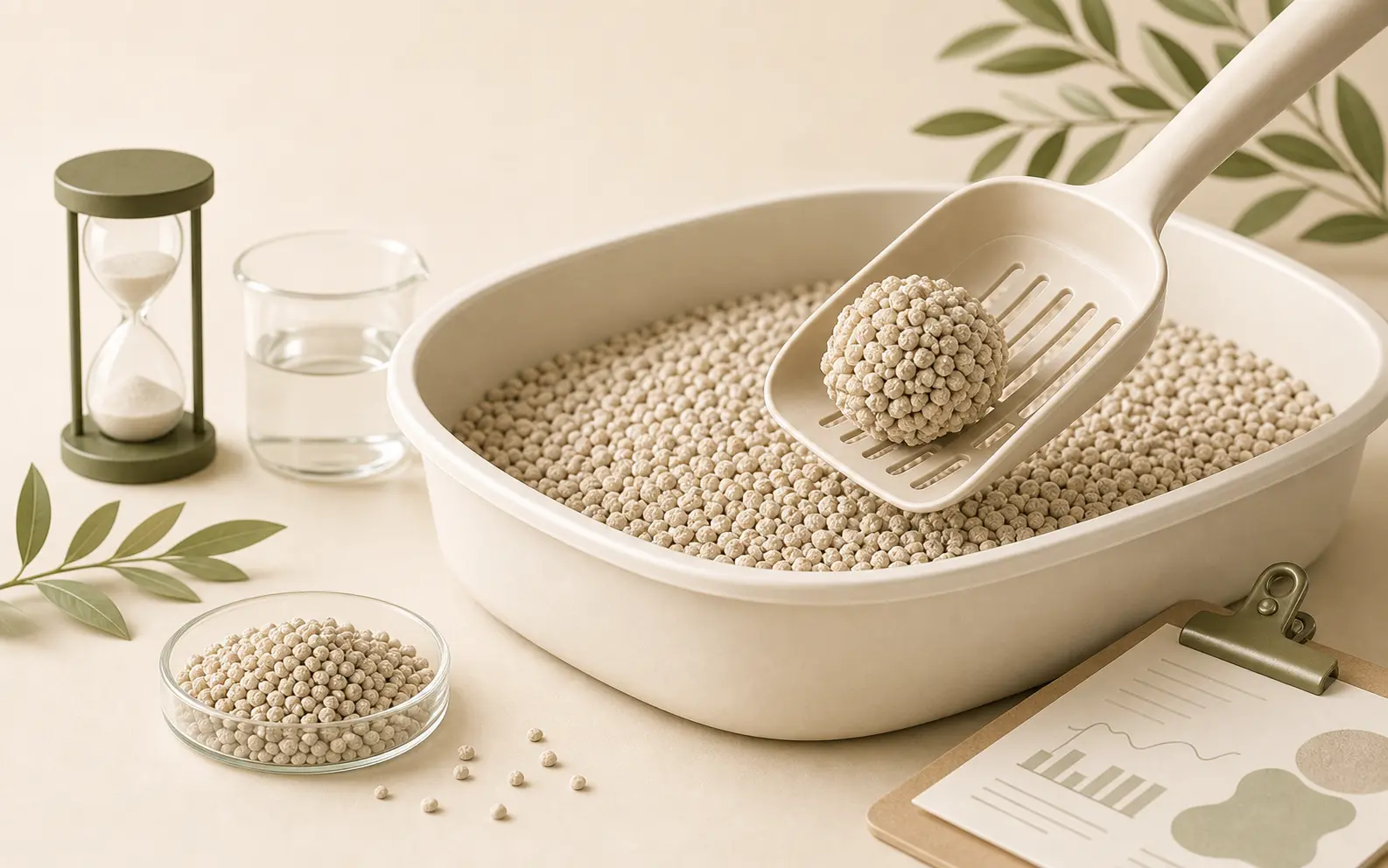
Define what good clumping means for the product
Fast liquid uptake is only one part of clumping performance. Buyers should also consider whether the clump remains intact during scooping, whether it sticks to the tray and how much loose or wet residue remains.
The desired balance depends on the litter type and customer expectations. A compact bentonite clump and a tofu pellet clump should not be assumed to behave identically.
Use consistent comparison conditions
Compare samples with the same litter depth, liquid quantity, application point, waiting time and scoop method. Note the room and storage conditions if they could affect moisture-sensitive products.
Visual demonstrations can be useful, but they should not replace a written test method. Ask which product specification or acceptance criteria can be used for the actual order.
Consider handling after production
Fines, broken granules or pellets, and changes in moisture can alter the customer experience. Packaging, storage and transport therefore belong in the review, especially when the supply route is long or the climate is humid.
For repeat orders, agree on the sample reference, inspection points and process for addressing deviations before placing a bulk order.