Start with the filled product
Cat litter packaging has to protect a relatively heavy or bulky product through filling, handling and transport. Bag structure, seal strength and any handle should be assessed at the intended fill weight, not from an empty sample alone.
Moisture-sensitive plant litter may need a suitable barrier, while dense mineral litter may place greater mechanical demand on the bag and carton. Ask for a packaging recommendation for the exact product and pack size.
Confirm which formats are actually available
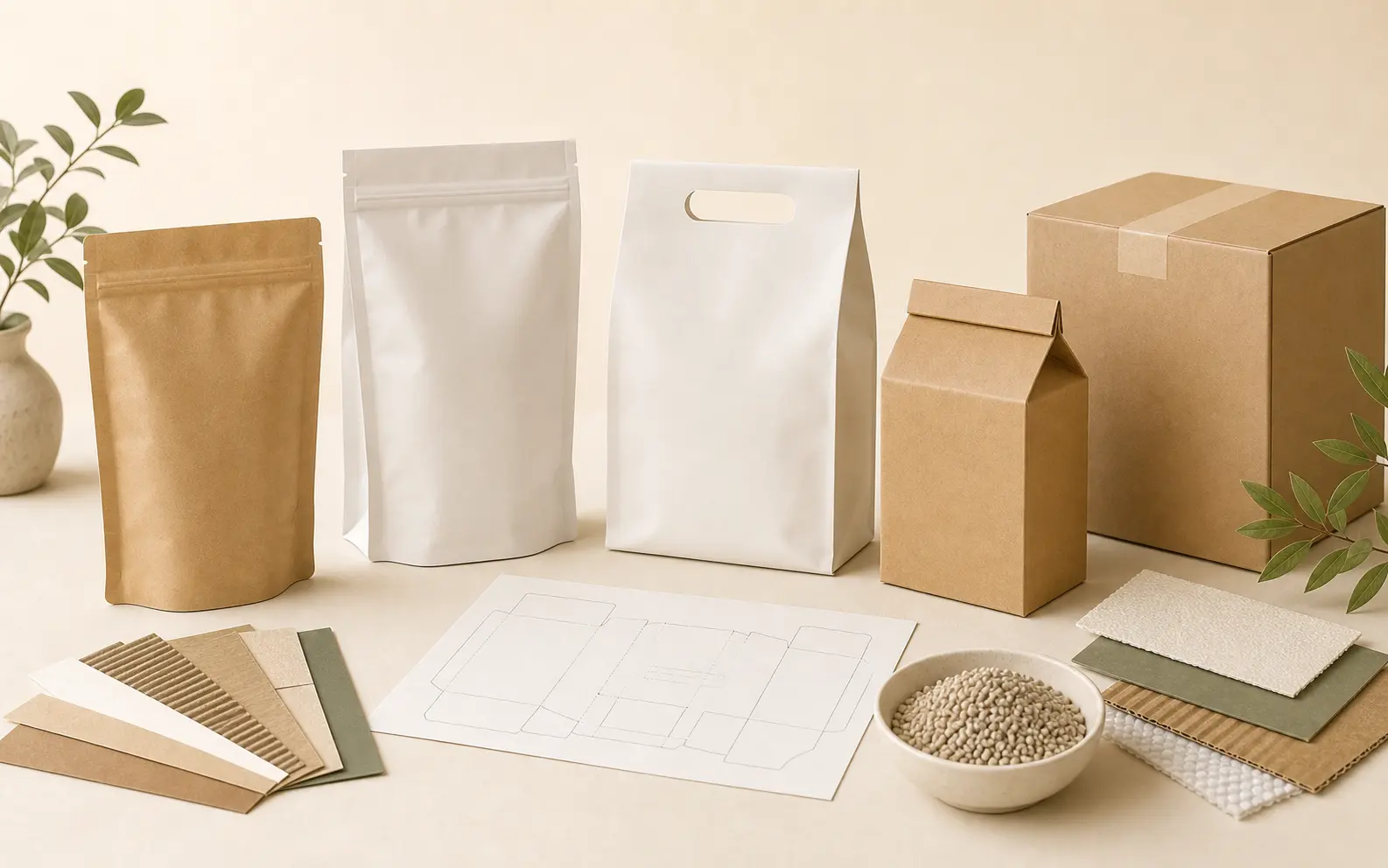
Potential formats include pillow bags, stand-up or flat-bottom pouches, handled bags and cartons. Zippers, handles, windows, kraft-look finishes and print methods may depend on bag dimensions, material structure and order quantity.
Request the applicable dieline and technical requirements before design work begins. This avoids artwork that cannot be produced in the selected format.
Prepare artwork and shipping details together
The buyer should verify product claims, local labeling requirements, language, barcode and legal information. The supplier can confirm production specifications, print limitations and file approval requirements. The project scope should state who is responsible for regulatory review and final copy approval.
Also define the master carton, shipping marks, pallet arrangement and container requirements. These details influence packing efficiency, damage risk and the final quotation.